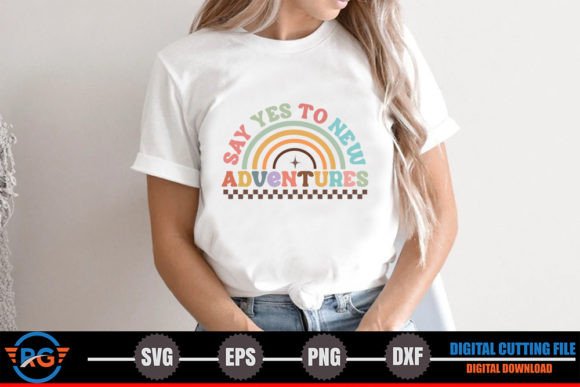
Say Yes to New Adventures – SVG Review
As someone who has spent years turning digital files into tangible, stitched treasures for clients and my own shop, I know that the difference between a good project and a great one often lies in the initial design choice. Today, I am evaluating Say Yes to New Adventures – SVG, a retro motivational piece that promises versatility with its inclusion of SVG, EPS, DXF, and PNG formats. Before you rush to load this into your embroidery machine or upload it to an Etsy listing, let's look at how this design actually performs when it hits the hoop.
The First Impression: Mood and Visual Personality
When I first opened the file package for Say Yes to New Adventures – SVG, the immediate feeling was one of wanderlust and optimism. The retro styling suggests a vintage travel poster vibe, which is currently trending heavily in the handmade market. It isn't just text; it feels like a badge of honor for the modern nomad. For a designer, the layout is clean, but the "retro" aspect means there are likely specific curves and font weights that need careful handling during digitization.
This design naturally belongs in projects that celebrate milestones, new beginnings, or personal growth. It creates a warm, inviting mood that works exceptionally well for nursery decor, baby gifts, or apparel for travelers. However, the success of the final product depends entirely on how the stitch density and line thickness translate from the vector file to thread. A design that looks crisp on a screen can sometimes become a tangled mess if the underlying structure isn't sound.
Real-World Application: From Screen to Stitch
I recently put Say Yes to New Adventures – SVG through a practical test scenario. My goal was to create a custom embroidered tote bag for a small boutique client who wanted a unique gift for her staff. The request was for something motivational but not overly cliché. This design fit the brief perfectly.
In this context, the ability to change colors (a feature highlighted in the product description) was crucial. I tested the design on a canvas tote using a deep navy thread against the natural cotton background. The contrast was sharp, making the message pop without overwhelming the fabric. Because the file includes separate formats like EPS and DXF, I was able to adjust the lettering spacing slightly to accommodate the curve of the tote bag handle area, ensuring the text didn't bunch up near the seams.
For commercial embroidery projects, such as creating a line of sweatshirt embroidery for a craft fair, this design offers high perceived value. Customers love personalized products that feel bespoke. When I mockuped the design on a dark gray hoodie, the retro aesthetic gave the garment a premium, streetwear feel. It transforms a standard blank item into a statement piece that customers are willing to pay a premium for. Whether you are an Etsy seller looking to boost your listings or a small shop owner creating branded merchandise, this graphic asset provides a professional foundation that elevates the finished product.
Where Caution Is Required
While the design is versatile, it is not without its challenges. As an experienced reviewer, I must point out where Say Yes to New Adventures – SVG might struggle in real-life situations. One of the primary concerns is the application on curved surfaces like caps or hats. While the file is editable, the curvature of a baseball cap can distort text that isn't specifically designed for 3D stitching. If you attempt to use this for a cap without adjusting the pathing, the letters may stretch or warp, ruining the retro aesthetic.
Furthermore, textured fabrics and thin materials require a delicate touch. If you are working with a loose-weave linen or a sheer fabric, the fill stitches might show through or cause puckering. In these cases, using a proper stabilizer is non-negotiable. Similarly, if you plan to use this for baby embroidery on delicate cotton onesies, you must check the stitch density. Dense areas can make the fabric stiff, which is uncomfortable for a baby's skin. Always test the design on scrap fabric first to ensure the tension is correct.
Small hoop sizes also present a risk. If the design contains intricate details or tiny lettering, shrinking it down to fit a 4x4 inch hoop could result in lost definition. The running stitches might disappear, and the satin stitches could merge together, leaving a blob rather than a clear message. Additionally, for products that need frequent washing, such as kitchen towels or aprons, ensure that the design is anchored well enough to withstand the agitation of the wash cycle without fraying.
Impact on Brand and Customer Trust
The visual appeal of your embroidery directly influences customer trust. A sloppy stitch job or a design that doesn't align correctly can make a handmade product look cheap, regardless of the quality of the fabric. Say Yes to New Adventures – SVG, when executed correctly, signals professionalism. It shows that you have taken the time to select a design that resonates with your target audience.
For digital product sellers, having a clean, color-changeable file allows you to create diverse printable mockups. You can showcase the design in various thread colors to attract different buyer segments, from pastel-loving parents to bold fashion enthusiasts. This flexibility enhances brand consistency across your shop. When a customer sees a cohesive collection of items featuring this design, they are more likely to view your shop as a reliable source for quality goods.
Practical Designer Notes for Success
To get the most out of this design asset, follow these practical steps before committing to a full production run:
- Test on Scrap Fabric: Never start on your final project material. Use a scrap piece of the same fabric type to check for puckering and thread breakage.
- Check Thread Color Contrast: Ensure the chosen thread colors provide enough contrast against the fabric. A light design on a light background will be invisible, while a dark design on a dark background might lack depth.
- Review Stitch Density: Look closely at the digitized file. High-density areas can lead to needle deflection, causing misalignment. Adjust the density if necessary to suit the fabric weight.
- Confirm Hoop Size: Verify that the design fits within your intended hoop size without cutting off any elements. Remember that the machine needs margin space to grip the fabric.
- Inspect Small Details: Zoom in on the smallest letters or decorative accents. If they are too fine, they may not stitch cleanly, especially on textured fabrics.
- Test Black and White Mockups: Convert the design to grayscale to see how the shapes hold up without the distraction of color. This helps identify structural weaknesses.
- Compare Light and Dark Backgrounds: Run a test on both light and dark fabrics to see how the design adapts. Some designs require underlay adjustments for dark backgrounds to prevent show-through.
- Use Proper Stabilizer: Match the stabilizer type (cutaway, tear-away, or water-soluble) to the fabric weight and the intended use of the garment.
- Verify Licensing: Confirm whether the license allows for commercial use of the finished items. This is critical for small business owners and Etsy sellers.
Ultimately, Say Yes to New Adventures – SVG is a strong contender for anyone looking to add a touch of inspiration to their embroidery projects. Its retro charm and editable nature make it suitable for a wide range of applications, from holiday gifts to boutique branding. However, the key to success lies in your attention to detail. By treating the design as a starting point rather than a finished solution, and by rigorously testing it on your specific materials, you can ensure that your finished product stands out as a true work of art.
Whether you are a hobbyist making a gift for a friend or a creative entrepreneur scaling your craft business, taking the time to evaluate the technical aspects of the design pays off. With the right preparation, this design can help you create memorable, high-quality items that customers will cherish.